Friday, 11 October 2013

Pop Art

Pop Art


Pop art is a very well know art style and often people are able to recognise the art form due to famous paintings and posters. It can be fairly easy to identify the characteristics of pop art on pictures and paint work.

From my research I have discovered that pop art was an art movement which first appeared in the 1950s, it was believed to be the earliest examples of postmodern Art.
It was formed in relation to abstract expressionism which was also an art movement which emerged post-world war in the 1940s. Similar to abstract expressionism, pop arts created art work which twisted the visual aspects of objects and existing material.
Pop art employs irony and parody and applies these attitudes to the objects or materials, which were culturally relevant at that time period. The objects included where from popular mass culture such as billboards, advertising, comic books, news etc.
Pop art was considered to mainly try to portray the attitudes and thoughts on the imagery that was created and not just on the objects themselves.

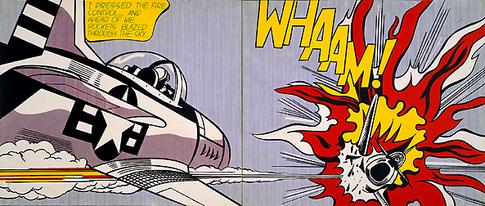
Pop art images are often associated with comic books. This because an American artist called Roy Lichtenstein became a renowned figure in the new pop art movement. He focused his work on comic strip style imagery and produced influential art work in the 1960s. The people during that culture favored his ability to incorporate parody into his work. An example of his art work is below:


Link


In this image Roy Lichtenstein has produced, it shows two fighter pilots in battle. Normally this image would have expressed a serious and sombre tone, however due to the comic book style quote and the type “WHAAM!” it creates a light-hearted humorous tone. Additionally the image uses vivid colours which helps convey the parody. The typography of the tagline “WHAAM!” feels playful as the letters are overlapping each other, not to mention the use of the exclamation mark. Also the text has a yellow fill which is a mellow colour. Furthermore, the type is a san-seriff font which allows the text to appear non formal.


Link
Link


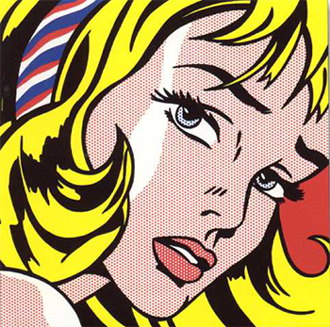
These images above are more examples of pop art. The right image is by another famous artist called Andy Warhol who also flourished in the 1960s and the left is a piece of art work inspired by Roy Lichtenstein. They may appear to look different but are both featured as pop art. The first image considers an interest in a super market object of tomato soup. This is because Andy Warhol had a passion to create abstract art on existing isolated objects, he has many more art work similar to this. Whereas, the left image concentrates on a comic book style art which was first inspired by Roy Lichtenstein.


Thursday, 10 October 2013

20th century sci-fi

Early 20th century sci-fi movie posters


So what is sci-fi? The literal definition of science fiction actually still remains up for debate. Although many groups and individuals have discussed the origins, the precise meaning has not been agreed.
However, personally the most compelling argument is that sci-fi became available between the 17th and early 19th century, this is due to the huge leap in scientific revolution at those times. There were major advancements in mathematics, physics and astronomy and in the 20th century the sci-fi genre grew in popularity following the further advancements in science. These included inventions that could be applied to daily life, which inspired exploration into future technology and scientific discoveries.
This lead to the development in science fictional literature as the society at that time was intrigued in the possibilities and future prospects for mankind. The fictional novels created satisfied the peoples fantasies.
Sci-fi has now become an established genre and is recognised for influencing the culture during the 19th century.


When you here the words sci-fi you may draw up some of your own ideas and images associated with it. Often one of the more popular associations with sci-fi is the Star Trek franchise. Gene Roddenberry first created the franchise and proposed the original Star Trek TV series in the 1960s. Since then there have been films, remakes, books and spin off series of the franchise and has still been produced today with contemporary remakes.
Below is a series of posters that have been used to promote the franchise and all contain the sci-fi visual style.

Link

Link

The images above are posters which I have come across which illustrate examples of 20th century sci-fi visual style. 
The first thing you may notice is the variety in the colour palette, the posters are very colourful which intrigues the viewer. However the shades of colours are dim and soft which give them a classic feel.
From my research I have discovered often in the sci-fi posters there is a non-human presence such as a robot, extra-terrestrial martian, enlarged creature etc this is apparent in the posters above.
The type featured in the posters are very bold and stand out from the poster especially the title of the movie. The posters use a san-seriff font which allow the viewer to clearly understand the text and messages.

Tuesday, 8 October 2013

Introduction - science poster

Introduction to first project


The first project we have been given requires us to create a science recruitment poster for the college.

The poster is aimed at prospective A-level students aged 16+ and should promote a specific area of science such biology, chemistry, physics or science in general.

We have been given existing visual styles to base our poster on, these include Steampunk, Victoriana, Pop art, early 20th century sci-fi movie poster or other book cover art.